The Short Answer
If you have sensitive skin, the best sunscreen is a broad-spectrum, SPF 30 or higher, mineral-based formula containing zinc oxide or titanium dioxide - free of chemical UV filters, fragrances, and unnecessary preservatives. Mineral sunscreens sit on top of the skin and physically block UV radiation rather than absorbing into skin cells, which is why they are far less likely to trigger reactions in sensitive skin types. For active individuals and athletes, the challenge is finding a mineral formula that also holds up to sweat, water, and repeated application without causing irritation.
Why This Matters for Athletes
- Your skin barrier is under constant assault. Sweat, sun, friction from gear, and environmental pollutants strip the skin's protective layer daily. A compromised barrier reacts more intensely to ingredients it might otherwise tolerate.
- Reapplication is non-negotiable. The FDA recommends reapplying sunscreen every two hours and immediately after heavy sweating or swimming. Athletes reapply more often than most people - which means any irritating ingredient has more chances to cause a reaction.
- Chemical filters have a real sensitization risk. Oxybenzone and avobenzone are common contact allergens. A 2020 FDA study found several chemical UV filters absorb into the bloodstream at concentrations above FDA-proposed thresholds - making mineral formulas the safer default for anyone with reactive skin.
- Fragrance is the most common skincare allergen. The American Academy of Dermatology identifies fragrance as the leading cause of allergic contact dermatitis in cosmetic products. Most mass-market sunscreens contain it.
- The wrong sunscreen can sideline you. A rash, burn, or breakout during training is more than uncomfortable. It can disrupt sleep, force you to train indoors, and compound over time into chronic skin damage.
Key Skin Stressors for Athletes with Sensitive Skin
Sensitive skin is not a single condition. It is a pattern of reactivity that can involve several overlapping triggers. As a dermatologist, I see these most often in my athletic patients:
UV radiation - Ultraviolet A rays penetrate deeply and are associated with premature aging and DNA damage to skin cells. UVB rays cause sunburn. Both are present year-round, including on overcast days and at high altitude. Athletes in outdoor sports typically accumulate UV exposure well above average population levels.
Sweat and friction - Sweat temporarily disrupts the skin's acid mantle and can carry irritants from sunscreen ingredients deeper into pores. Friction from helmets, goggles, wetsuit collars, and sports bras concentrates product on specific zones and increases absorption and irritation potential at those sites.
Heat - Elevated skin temperature during exercise increases blood flow to the surface and may enhance absorption of topical ingredients. Heat also accelerates evaporation of water-based sunscreen carriers, concentrating active ingredients on the skin's surface.
Water exposure - Prolonged water contact - whether from swimming, surfing, kayaking, or rain - softens the skin's outer layer (stratum corneum) and can reduce its resistance to chemical penetration. This matters for both irritation risk and SPF durability.
Environmental allergens - Cyclists, runners, and triathletes encounter airborne pollen, pollution particulates, and grass allergens that can stack on top of product ingredients, increasing the total inflammatory load on skin.

What to Look For in a Sunscreen for Sensitive Skin
Ingredients That Protect Without Irritating
Zinc oxide (non-nano) - The gold standard active ingredient for sensitive skin. Zinc oxide provides broad-spectrum UVA and UVB protection, has excellent safety data, and is the only active ingredient currently classified as "generally recognized as safe and effective" (GRASE) by the FDA when used at appropriate concentrations. Non-nano formulations use particles large enough that they do not penetrate intact skin.
Titanium dioxide - A secondary mineral active that provides strong UVB coverage. Often paired with zinc oxide in hybrid mineral formulas for broader spectrum performance.
Hyaluronic acid - A naturally occurring molecule in the skin that binds water and helps maintain hydration. Its inclusion in a sunscreen formula helps offset the drying effects of outdoor activity and repeated product application.
Antioxidants (Vitamin E, Vitamin C, Shea butter) - Help neutralize free radicals generated by UV exposure. Research suggests antioxidant-fortified sunscreens may offer additive photoprotection beyond the SPF rating alone.
Ingredients to Avoid
Oxybenzone and octinoxate - Chemical UV filters with documented sensitization potential. Oxybenzone is also restricted under Hawaii's reef protection law (HI SB2571) due to marine toxicity evidence.
Fragrance and parfum - Listed as a single ingredient but may represent dozens of undisclosed chemical compounds, many of which are known skin sensitizers.
Alcohol (denatured/SD alcohol) - Used as a solvent in many lightweight sunscreens. Can disrupt the skin barrier, cause stinging on reactive skin, and accelerate moisture loss - particularly problematic for athletes whose skin is already stressed.
Parabens and formaldehyde releasers - Preservative systems associated with contact allergy in a subset of sensitive skin patients.
The Routine - Before, During, and After Activity
Before Activity
Cleanse gently first. Start with a gentle, fragrance-free cleanser that removes residual product, environmental debris, and overnight skin shedding without stripping the skin's barrier. Avoid cleansers with exfoliating beads or acids if your skin is reactive. Dermasport's Gentle Facial Cleanser is formulated specifically for active skin - it removes sunscreen, sweat, and chlorine without disrupting the skin's acid mantle.
Apply sunscreen 15 minutes before sun exposure. Mineral sunscreens provide protection immediately upon application - they do not require "activation time" the way chemical filters do. That said, allowing 15 minutes before heading out ensures even coverage and complete drying before sweat or water exposure begins.
Apply to dry skin. Wet or sweaty skin dilutes product on application, reduces adhesion, and may result in patchy coverage. Apply to clean, dry skin and allow to set before starting your warmup.
Do not forget the eyes, ears, and neck. These are high-UV-exposure zones that athletes frequently miss. The periorbital area (around the eyes) is among the thinnest and most sensitive skin on the face. Goggle and helmet pressure in this area can contribute to hyperpigmentation over time. Dermasport's Eye Cream is formulated to address exactly this concern - with peptides that help reduce the appearance of pressure darkening and fatigue around the eyes.
During Activity
Reapply every two hours of sun exposure - and immediately after 80 minutes of swimming or heavy sweating, even if using a water-resistant formula. No sunscreen is truly "waterproof." Water-resistant ratings of 40 or 80 minutes reflect standardized lab testing conditions - actual field performance varies based on activity intensity, water temperature, and how vigorously you towel off.
Use a stick for targeted reapplication. SPF sticks allow precise reapplication around hairlines, ears, and the nose without disturbing goggle seals or helmet padding. They are easier to carry in a cycling jersey pocket, wetsuit bag, or running vest than a tube or bottle.
Check for signs of irritation. Stinging, redness, or warmth beyond what is expected from exertion can indicate barrier disruption or product sensitivity. If you notice these signs during activity, rinse the area with clean water and do not reapply the suspected product until you can assess the reaction.
After Activity
Cleanse promptly. Leaving sunscreen, sweat, salt, and chlorine on skin post-activity increases the window for irritation and pore congestion. Cleanse within 30 minutes of finishing if possible. This is especially important for acne-prone or reactive skin types.
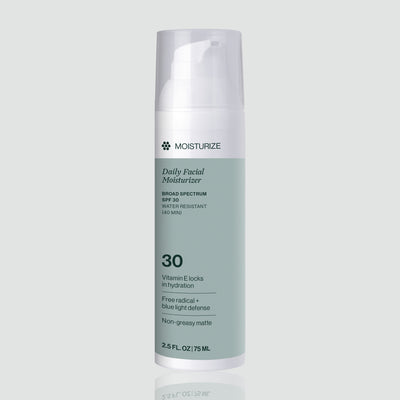
Moisturize while skin is still slightly damp. Applying moisturizer to slightly damp skin helps lock in water before it evaporates. Look for formulas with humectants (hyaluronic acid, glycerin) and barrier-supporting ingredients (shea butter, ceramides). Dermasport's Daily SPF 30 Facial Moisturizer combines daily UV protection with hydration support - making it a practical all-in-one option for recovery days or lower-intensity training.
Give your skin time to recover. Dermasport's ARC (Ageless Recovery Complex) is our proprietary formulation designed to help active skin recover from the cumulative effects of UV, sweat, and environmental stress. Incorporating recovery-focused products into your post-activity routine is as important for your skin as stretching is for your muscles.
Common Mistakes
Is SPF 30 really enough for outdoor athletes?
SPF 30 blocks approximately 97% of UVB rays. SPF 50 blocks approximately 98%. The real-world difference is small when sunscreen is applied generously and reapplied correctly. However, because most people under-apply sunscreen (research suggests the average person applies 25-50% of the recommended amount), SPF 50 provides a practical buffer. I recommend SPF 50 for athletes doing prolonged outdoor activities, particularly in high-UV environments like the water, snow, or high altitude.
Can mineral sunscreen cause breakouts?
Poorly formulated mineral sunscreens can feel heavy and occlude pores - especially older zinc oxide formulas that leave a visible white cast. Modern mineral formulations use optimized zinc oxide dispersions that apply more thinly, absorb more cleanly, and are far less likely to contribute to congestion. Look for "non-comedogenic" on the label and test on a small area first if you have acne-prone skin.
Is a white cast unavoidable with mineral sunscreen?
Not anymore. The white cast associated with zinc oxide is largely a function of particle size and dispersion technology. Better-formulated mineral sunscreens use optimized zinc dispersions that minimize the cast significantly. Dermasport's SPF 50 Facial Sunscreen uses a 20% zinc oxide concentration with a dispersion technology designed to minimize white cast - 94% of users in our study said it left less white cast compared to other mineral sunscreens they had used.
Can I skip sunscreen on cloudy days or in winter?
No. Up to 80% of UV radiation passes through cloud cover, according to the WHO. UVA radiation is also present year-round and can penetrate glass - relevant for cyclists, runners, and swimmers near windows during indoor training. Snow reflects up to 80% of UV radiation, amplifying exposure at ski areas and winter outdoor venues. Read our dermatologist's guide to sun protection for skiers for more on altitude and snow reflection risks.
Does darker skin need sunscreen?
Yes. While higher melanin concentrations in darker skin tones provide some natural UV protection (estimated equivalent to approximately SPF 13 in the darkest skin types), this does not eliminate UV damage or skin cancer risk. Skin cancer in people with darker skin is frequently diagnosed at later stages, partly because it is often perceived as a lower-risk group. All skin types benefit from daily broad-spectrum sun protection.
Should I use the same sunscreen for my face and body?
Not always. Facial skin is thinner, more vascular, and typically more reactive than body skin. It also has a higher density of sebaceous glands, which can interact differently with product ingredients. Body-specific sunscreens are often formulated with thicker carriers suited to larger surface area application. I recommend using a facial-specific formulation for the face - especially if you have sensitive or acne-prone skin.
Quick Checklist: Choosing Sunscreen for Sensitive Skin
- Broad-spectrum (UVA + UVB) protection
- SPF 30 minimum - SPF 50 preferred for outdoor athletes
- Mineral active ingredients: zinc oxide and/or titanium dioxide
- Fragrance-free and alcohol-free
- No oxybenzone, octinoxate, or other chemical UV filters
- Water-resistant 80 minutes rating for active use
- Non-comedogenic if acne-prone
- Tested on sensitive skin - look for clinical testing data, not just label claims
Frequently Asked Questions
What is the safest sunscreen for sensitive skin?
The safest sunscreens for sensitive skin are mineral-based formulas containing zinc oxide or titanium dioxide as the only active ingredients. These physical blockers sit on top of the skin without absorbing into skin cells, significantly reducing the risk of irritation or allergic reaction. They should also be fragrance-free, alcohol-free, and free of common preservative allergens. The FDA currently recognizes zinc oxide and titanium dioxide as the only two active sunscreen ingredients that are both safe and effective under their proposed monograph update.
What is the difference between mineral and chemical sunscreen for sensitive skin?
Mineral sunscreens use zinc oxide and/or titanium dioxide to physically reflect and scatter UV radiation at the skin's surface. Chemical sunscreens use synthetic UV-absorbing compounds (such as oxybenzone, avobenzone, or octinoxate) that convert UV energy into heat within the skin. For sensitive skin, mineral formulas are generally preferred because they are less likely to cause stinging, redness, or allergic reactions - and because the FDA's 2020 sunscreen review found that several chemical UV filters are absorbed into the bloodstream at potentially significant levels, with insufficient safety data to confirm they meet GRASE criteria.
What SPF do dermatologists recommend for sensitive skin?
Most dermatologists, including the American Academy of Dermatology, recommend a minimum of SPF 30 for daily use and SPF 50 for prolonged outdoor activity. For athletes training outdoors regularly, SPF 50 with an 80-minute water-resistant rating is the practical standard. Critically, SPF value alone does not determine protection - application amount and reapplication frequency matter more than the SPF number in real-world use.
Can athletes with sensitive skin use mineral sunscreen without a white cast?
Yes. Modern mineral sunscreen formulations have substantially reduced the white cast historically associated with zinc oxide. Advances in zinc oxide dispersion technology allow higher concentrations of active ingredient to be incorporated into thinner, more transparent films. The best mineral sunscreens for athletes are those specifically formulated for facial use, as these tend to use the most refined dispersions. Look for products that have been user-tested for white cast reduction in active, diverse populations.
How often should athletes reapply sunscreen for sensitive skin?
Every two hours of continuous sun exposure, and immediately after 80 minutes of swimming or heavy sweating - even if using a formula rated water-resistant for 80 minutes. The FDA's water-resistance rating reflects laboratory conditions; real-world performance can vary. Athletes should carry their sunscreen with them and treat reapplication the same way they treat hydration: scheduled, not optional.
Is zinc oxide safe for sensitive and acne-prone skin?
Yes. Zinc oxide has an excellent safety profile for sensitive skin. It is non-comedogenic in well-formulated products, has mild anti-inflammatory properties, and is the active ingredient used in diaper rash creams - one of the most protective applications for barrier-compromised skin. Zinc oxide is also Hawaii reef-safe compliant under SB2571, making it the right choice for ocean and reef environments. Look for "non-nano" zinc oxide in formulas intended for aquatic use.
What should athletes with rosacea or eczema look for in a sunscreen?
Athletes with rosacea or eczema should prioritize mineral sunscreens with the shortest possible ingredient list. Key considerations: fragrance-free is non-negotiable; avoid alcohol-based formulas that sting on compromised skin; look for soothing ingredients like bisabolol, aloe, or shea butter; and select formulas that have been patch-tested or specifically tested on sensitive skin conditions. Applying sunscreen over a thin layer of unfragranced moisturizer can also help reduce direct ingredient contact with the skin's surface in very reactive individuals.
Does moisturizer with SPF count as sunscreen for athletes?
For low-intensity outdoor activity or incidental sun exposure, an SPF moisturizer may provide adequate protection. For athletes training outdoors for more than 30 minutes, particularly in high-UV conditions (midday, high altitude, near water, or snow), a dedicated SPF 50 formula applied generously and reapplied regularly provides more reliable protection. SPF moisturizers are typically applied more thinly than sunscreens, which reduces their effective protection level below the labeled SPF value.
References
- Mancuso JB, Maruthi R, Wang SQ, Lim HW. Sunscreens: An Update. American Journal of Clinical Dermatology. 2017;18(5):643-650. doi:10.1007/s40257-017-0290-0
- Matta MK, Zusterzeel R, Pilli NR, et al. Effect of Sunscreen Application Under Maximal Use Conditions on Plasma Concentration of Sunscreen Active Ingredients. JAMA. 2019;321(21):2082-2091. doi:10.1001/jama.2019.5586
- Matta MK, Florian J, Zusterzeel R, et al. Effect of Sunscreen Application on Plasma Concentration of Sunscreen Active Ingredients: A Randomized Clinical Trial. JAMA. 2020;323(3):256-267. doi:10.1001/jama.2019.20747
- Burnett ME, Wang SQ. Current sunscreen controversies: a critical review. Photodermatology, Photoimmunology & Photomedicine. 2011;27(2):58-67. doi:10.1111/j.1600-0781.2011.00557.x
- American Academy of Dermatology. Sunscreen FAQs. aad.org
- U.S. Food and Drug Administration. Sunscreen: How to Help Protect Your Skin from the Sun. fda.gov
- World Health Organization. Sun protection. who.int
- Sander M, Sander M, Burbidge T, Beecker J. The efficacy and safety of sunscreen use for the prevention of skin cancer. CMAJ. 2020;192(50):E1802-E1808. doi:10.1503/cmaj.201085.
- Sambandan DR, Ratner D. Sunscreens: an overview and update. Journal of the American Academy of Dermatology. 2011;64(4):748-758. doi:10.1016/j.jaad.2010.01.005
- Nahhas AF, Abdel-Malek ZA, Kohli I, et al. Melanin and skin color: the role of melanin in photoprotection and photobiological effects. Photodermatology, Photoimmunology & Photomedicine. 2019;35(6):383-391. doi:10.1111/phpp.12498
- Castanedo-Cazares JP, Hernandez-Blanco D, Carlos-Ortega B, et al. Near-visible light and UV photoprotection in the treatment of melasma: a double-blind randomized trial. Photodermatology, Photoimmunology & Photomedicine. 2014;30(1):35-42. doi:10.1111/phpp.12086
- Draelos ZD. The multifunctional value of sunscreen-containing cosmetics. Skin Therapy Letter. 2011;16(7):1-3. PMID: 21931952
A Note on Dermasport Products
Dermasport was founded by a board-certified dermatologist specifically to address the gap between what athletes need from a skincare routine and what was available on the market. Our SPF 50 Facial Sunscreen was formulated with 20% non-nano zinc oxide, hyaluronic acid, and shea butter - reef-safe, fragrance-free, and tested to remain effective after 80 minutes of swimming or sweating. It is trusted by the United States Lifesaving Association (USLA) and the United States Masters Swimming (USMS) community, and comes with a 60-day money-back guarantee. If you are navigating sensitive skin alongside an active lifestyle, you can also read my guide on common sunscreen myths and Sunscreen 101 for deeper background on how SPF actually works.
Dr. Christopher Schmidt, MD is a board-certified dermatologist, co-founder of Dermasport, and a lifelong competitive swimmer and endurance athlete. For clinical dermatology resources, visit ChristopherSchmidtMD.com.