

A sunscreen can stay put through a hard workout and still feel like the wrong fit for your skin.
Maybe your face looks oilier halfway through a run. Maybe the areas under your helmet, headband, or goggles are where breakouts keep showing up. When you sweat often, the sunscreen you put on before training has to work with more than just sun exposure.
That is where non-comedogenic sunscreen comes in. The term sounds technical, but the idea is simple: choosing a formula that is less likely to clog your pores.
In this blog, we will look at what non-comedogenic really means, why it can matter more when you train regularly, what oily or breakout-prone skin should look for, and what to do once the workout is over.
What Does Non-Comedogenic Sunscreen Actually Mean?
In practical skincare language, non-comedogenic means a product is formulated to be less likely to clog pores. You may also see the phrase “won’t clog pores.” If your skin is oily, “oil-free” is another label worth looking for.
That can be useful if your skin tends to develop blackheads, whiteheads, or breakouts. The American Academy of Dermatology recommends looking for oil-free or non-comedogenic products when acne or oily skin is a concern.
There is one important catch. “Non-comedogenic” does not come with one universal FDA-defined testing standard. Treat it as a useful clue, not a guarantee that a formula can never cause a breakout.
When Sweat, Oil, and Gear All Meet Your Face
A sunscreen that feels fine when you apply it can feel very different 30 minutes into training.
Sweat and oil are now on your skin. A helmet, headband, chin strap, goggles, or sunglasses may be pressing against the same areas over and over.
That friction matters. The AAD notes that equipment can contribute to acne mechanica when it traps heat and sweat against acne-prone skin while repeatedly rubbing it.
That does not mean sweat automatically clogs your pores. It means your sunscreen is only one part of what your skin is dealing with during a workout.
If your skin is already oily or breakout-prone, choosing a non-comedogenic formula gives you one less thing to worry about.
Oily or Breakout-Prone Skin? Here’s What Matters Most
Having oily skin is not a reason to skip sunscreen.
The goal is to find a sunscreen for oily skin that protects you without feeling unnecessarily heavy. The AAD recommends oil-free and non-comedogenic skincare for oily skin and also advises wearing sunscreen outdoors.
Think about how the product behaves during your actual workout. Does it feel heavy once you sweat? Are you comfortable applying enough? Will you realistically reapply it?
A non-comedogenic SPF is most useful when it also feels practical enough to use consistently.
Non-Comedogenic Does Not Mean Breakout-Proof
A sunscreen can be described as non-comedogenic and still not suit every person.
Skin type varies. So do the other products you use, the gear touching your face, how often you cleanse, and how much friction your skin experiences during training.
If breakouts keep appearing in the same place under a helmet, chin strap, or headband, sunscreen may not be the only factor. Sports equipment itself can contribute to breakouts where it repeatedly traps heat and sweat or rubs against the skin.
That is why it is better to judge the finished formula and how your skin responds rather than focusing on one ingredient or one label claim.

“Won’t Clog Pores” Is Only One Box to Check
For an outdoor athlete, a non-pore-clogging sunscreen still has to do the main job well.
Before choosing one, ask:
-
Is it broad spectrum?
-
Is it SPF 30 or higher?
-
Is it water resistant for sweaty or water-based training?
-
Is it labeled non-comedogenic, oil-free, or “won’t clog pores” if that matters for your skin?
-
Does it feel comfortable enough that you will apply and reapply it?
The AAD recommends broad-spectrum SPF 30 or higher, water resistance, and an oil-free formulation for outdoor exercise.
And do not confuse non-comedogenic with mineral or chemical sunscreen. They answer different questions. If you are deciding between filter types, Dermasport’s mineral vs. chemical sunscreen guide for athletes goes deeper into that comparison. Read the mineral vs. chemical sunscreen guide
Don’t Let Sweat and Sunscreen Sit There All Day
Once the workout is over, your skincare routine does not need to get complicated.
After heavy sweating, gently wash away the mix of sweat, sunscreen, oil, and debris sitting on your skin. The AAD recommends cleansing acne-prone skin after sweating and avoiding aggressive scrubbing, which can add unnecessary irritation.
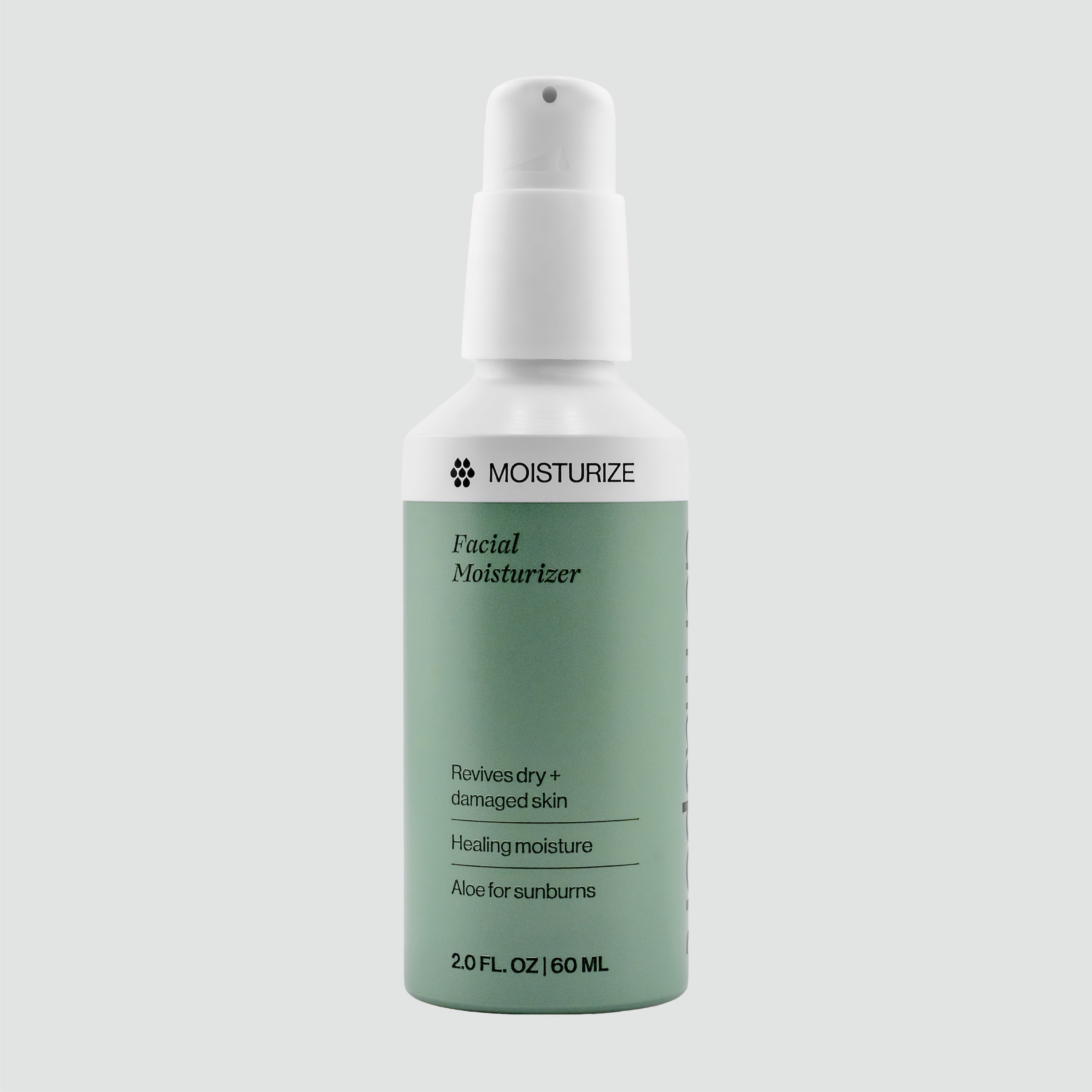
For athletes, a simple routine is usually enough: protect before training, cleanse afterward, and moisturize if your skin needs it.
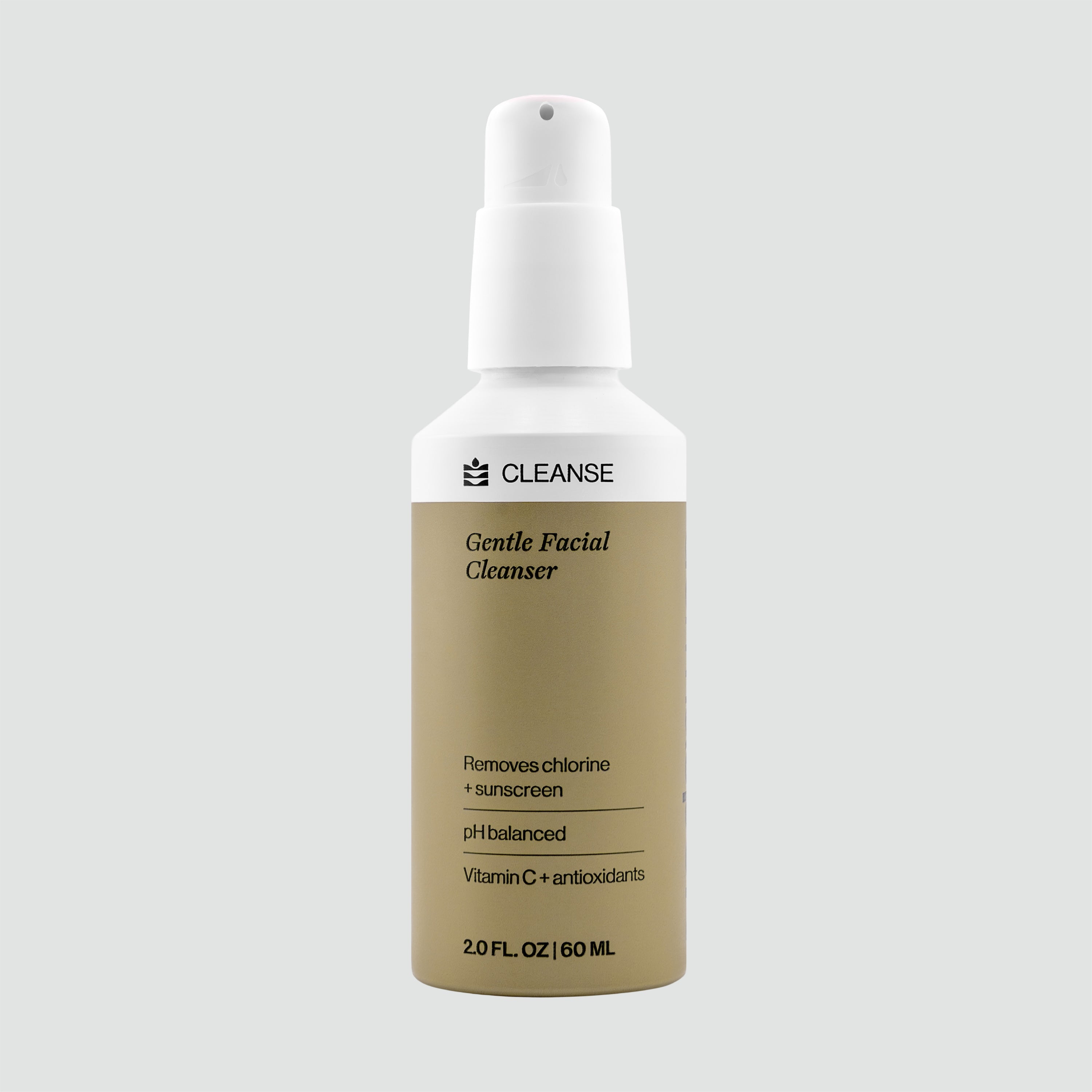
A gentle facial cleanser can fit naturally into that post-workout step by helping remove what built up during training without turning skincare into another long routine.
A Face Sunscreen Still Has to Perform During Training
A non-comedogenic label is useful, but outdoor training still asks more from a face sunscreen.
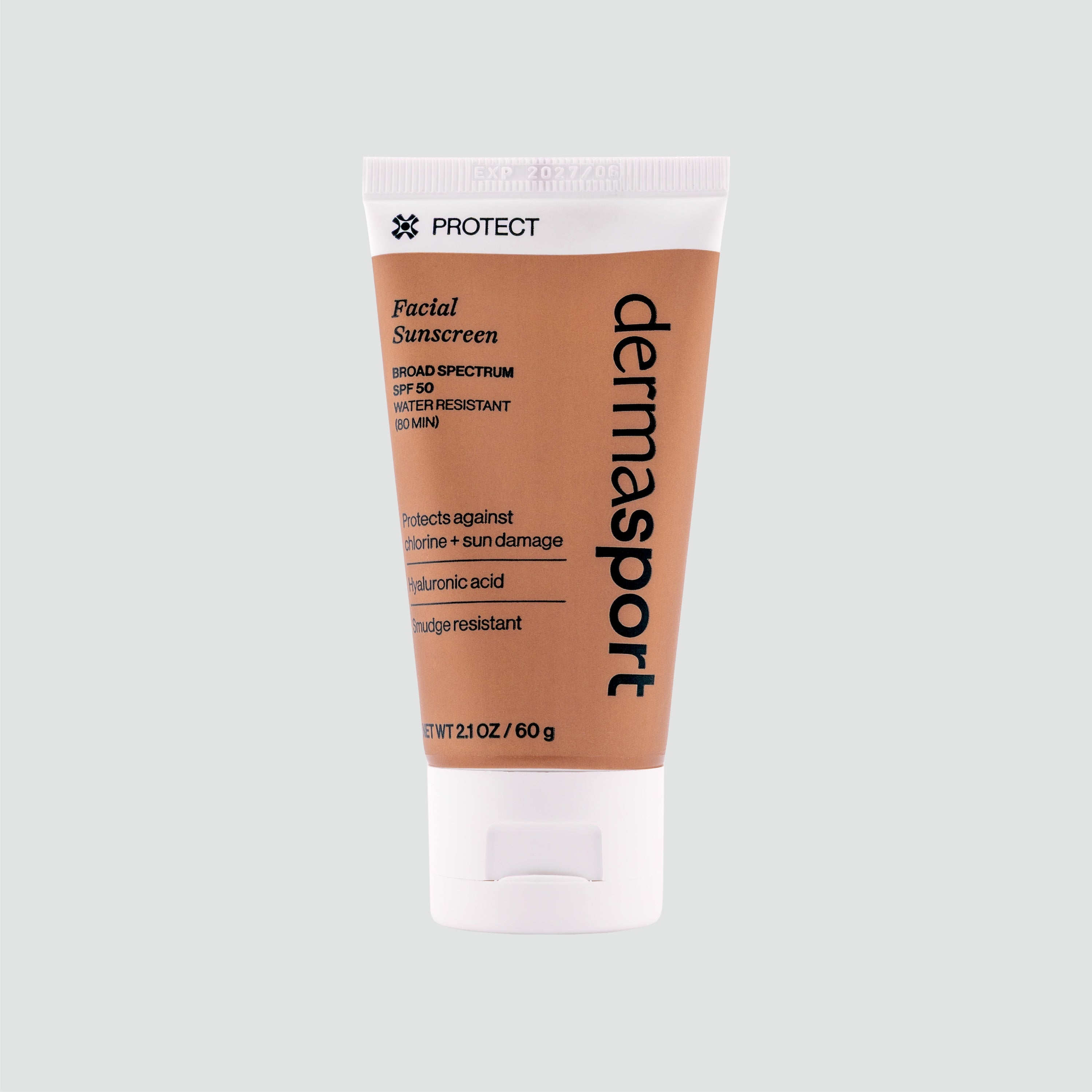
For example, Dermasport’s SPF 50 Facial Sunscreen Lotion is labeled “Won’t Clog Pores,” while also providing broad-spectrum SPF 50 protection and 80 minutes of water resistance. It uses 20% non-nano zinc oxide.
The goal is to find a formula that fits both your skin and the conditions you train in.
Your Sunscreen Should Work With Your Skin and Your Training
If oily or breakout-prone skin has made facial sunscreen frustrating in the past, “non-comedogenic” gives you a useful place to start.
From there, pay attention to how the formula actually works once you train. The right sunscreen should protect your skin without making your routine harder to stick with.
If you're looking for sun protection built around active use, explore Dermasport’s sunscreen options and find the formula that fits the way you train.


